Walk into a school office anywhere in the world at 3 p.m. and you will usually see the same scene: a clerk copying attendance from one register to another, the accountant adding fee payments by hand, and an assistant holding a phone call from a parent who wants a balance figure that will take ten minutes to find.
None of these people are lazy. They are victims of a system that makes them type and re-type the same information all day. This guide is a plan for a principal to cut that workload ΓÇö not by hiring more staff, but by removing the repetition. I have watched the same pattern play out in schools across Asia, Africa, and Europe, and the fix is identical everywhere: find the duplicate work, kill it, and give the hours back to people.
Start with a time audit
Before changing anything, spend one week logging the office's work. For every task, ask:
- ΓÇóWho does it?
- ΓÇóHow many times a week?
- ΓÇóIs the information already written somewhere else?
The last question is the key one. In most schools, the same student's name and fee status exist in three places: the register, the spreadsheet, and the accountant's notebook. Every one of those copies is extra work and a chance for a mistake.
The audit does not need to be fancy. A single sheet of paper with three columns is enough, or a simple spreadsheet if the office is comfortable with one. Do not assign the audit to the most junior person and hope for the best ΓÇö sit with each role for an hour and watch the actual work. What people say they do and what they actually do are rarely the same thing, and the second version is the one you need on the sheet.
The four biggest time wasters
In my experience, these four things eat most office hours:
1. Duplicate data entry
The same information entered into multiple places. The fix: choose one place as the single source of truth and make everything else read from it.
2. Answering the same questions on the phone
"What time does school close?" "Did my child attend today?" "What is my fee balance?" Each question interrupts real work. The fix: put the answers where parents can reach them themselves ΓÇö a notice, a broadcast message, or a simple parent portal.
3. Hand-writing recurring documents
Challans, result cards, ID cards, and certificates are all produced from the same student data. Hand-writing each one means the data is re-entered every single time. The fix: generate these documents from the student record instead of retyping.
4. Reconciling at month-end
The month-end scramble exists because daily records are loose. The fix: reconcile daily in small batches, so month-end is a formality, not a crisis.
What the hours add up to
Here is a rough picture of what a mid-size school office gives back once the repetition is removed:
| Time waster | Before | After | | --- | --- | --- | | Duplicate data entry | Names typed into 3+ places | Entered once, read everywhere | | Phone questions | 15+ interruptions a day | Parents check answers themselves | | Recurring documents | Each card and challan hand-typed | Generated in one batch | | Month-end reconciliation | A full day or more of panic | A 20-minute formality |
The exact hours depend on your school, but the direction is always the same. One school I worked with measured 12 hours of office time a week going to pure copying ΓÇö re-typing names and amounts that already existed somewhere. Twelve hours is one and a half working days. That is not busywork; that is a staffing decision nobody made on purpose.
A practical six-week plan
Week 1 ΓÇö Clean the student register. Remove duplicates, fix names and classes, and agree on one numbering system. Everything else depends on this list being right.
Week 2 ΓÇö Kill one duplicate process. Pick the biggest one, usually fee recording. Decide the single place where a payment is recorded, and stop recording it anywhere else.
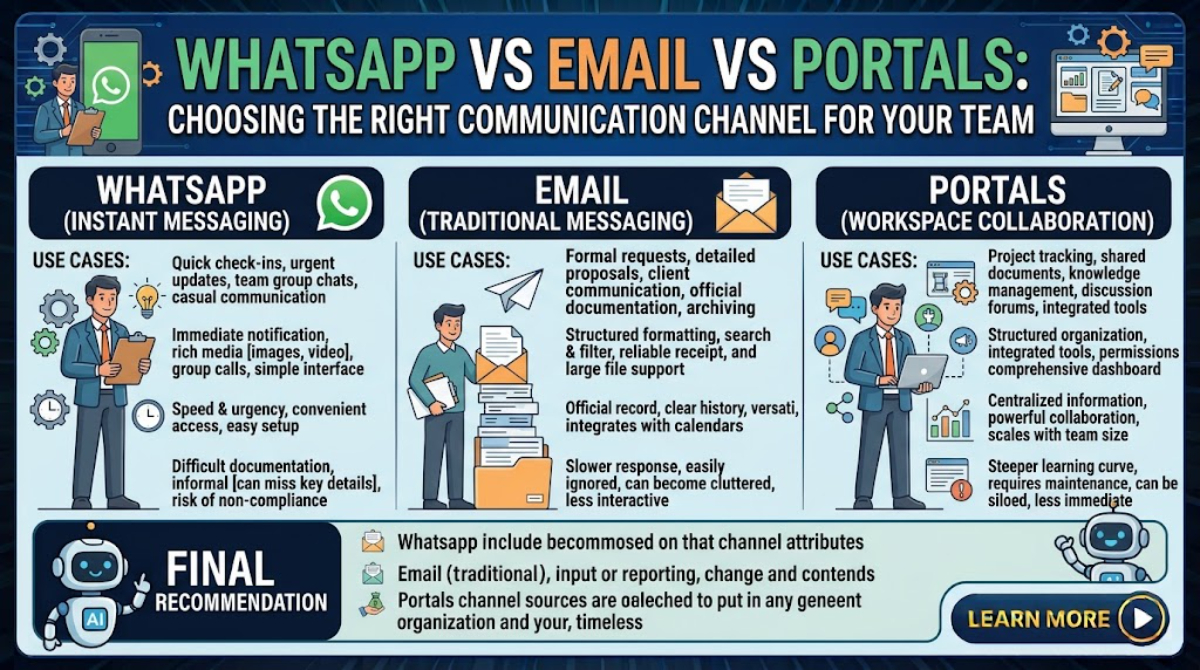
Week 3 ΓÇö Move the top five phone questions online. Draft replies for attendance, timings, fees, transport, and results. Send them through the channel the school already uses ΓÇö in many parts of the world that is WhatsApp, in others it is email or SMS. Tell office staff to direct parents there.
Week 4 ΓÇö Automate the recurring documents. If you have a school management system, use it to batch-generate challans and result cards. If you only have spreadsheets, build a template that prints a whole class at once.
Week 5 ΓÇö Reconcile daily. Fifteen minutes at closing time, every day. It feels wasteful until the month-end arrives and nothing explodes.
Week 6 ΓÇö Measure and repeat. Compare office hours logged in week 1 against this week. Share the number with the staff. Then pick the next process and repeat the cycle.
What to tell the staff
Change fails when staff feel like software is being imposed on them. Frame it correctly:
- ΓÇó"This tool does the copying, so you can do the actual work."
- ΓÇó"Nothing changes until you say it works. We run it in parallel for a month."
- ΓÇó"You will not be punished for the transition being slow ΓÇö you will be thanked for the records being right."
I have watched this framing turn reluctant offices into the loudest champions of the new system. The staff are not the obstacle; fear of being replaced or blamed is. Say the words out loud before the rollout, and repeat them the first time a clerk makes a mistake in the new system. The way you handle that first error decides whether the whole school adopts the change.
Tools that do not cost a fortune
You do not need an enterprise product. A spreadsheet with a clean structure, or a budget school management system with fees, attendance, and a parent portal, covers 90 percent of a school's workload. The expensive systems add reporting and multi-branch features you will not use this year.
The same lesson, different countries
The principle is the same wherever the school sits, but the specifics differ. In South Asia, parents communicate through mobile wallets and WhatsApp, so reminders travel there. In much of Europe and North America, email and the school app carry the same messages. In parts of Africa and Latin America, SMS remains the reliable channel because it works on every phone and survives weak connections. None of this changes the lesson: the parent contact that is automated and self-serve removes the office's most constant interruption.
Money works the same way. Whether fees are collected in rupees, naira, or dollars, the office still chases the same unpaid list at month-end, and a system that generates reminders on a schedule collects more than one that relies on memory.
Frequently asked questions
How do I know the audit is worth it? If you cannot produce a clean monthly fee report without a day of work, you have already found the answer.
What if staff resist the change? Run the old and new system in parallel for one month. Most resistance disappears when they see the duplicate work vanish.
Is a messaging channel enough instead of a portal? For many schools, yes ΓÇö a well-organised broadcast channel removes most phone calls. A portal adds balance checks and attendance lookups, which is better, but it is a step up.
Do we need a software budget for this? Start with spreadsheets if money is tight. The audit, the single source of truth, and the daily reconciliation cost nothing and deliver most of the gain.
How long until we see results? The audit alone usually uncovers enough duplicate work to justify the change in week one. Most schools feel a difference within a month.
The goal is not a paperless school. It is a school where staff spend their hours on people and teaching, not on copying the same names from one register to another. That is a change worth making ΓÇö and it starts with one honest audit.
Jawad Zaheer Kyani
Founder & Software Engineer at Synthixx
Jawad Zaheer Kyani is the founder of Synthixx Technologies. He is a software builder from Muzaffarabad, in the beautiful valleys of Azad Jammu & Kashmir, and he founded the company on a simple belief: practical software should work for people everywhere, not just in Silicon Valley. He runs Synthixx with one rule — ship tools that still hold up on a busy Tuesday, not slides that only look good in a meeting.He founded Synthixx in the valleys of Azad Jammu & Kashmir with a simple ambition: to prove that world-class, practical software can come from anywhere — and to put his region on the global map. Every article on this blog is written or reviewed by him, grounded in the day-to-day work of actually building the products.Before starting Synthixx, he spent years building software for schools, startups, and businesses across Pakistan and internationally. He writes about AI, school management, free tools, and the real challenges of building technology outside of major tech hubs.
View full profile →